 |


|
Robert Caro's LBJ: Not making the trip


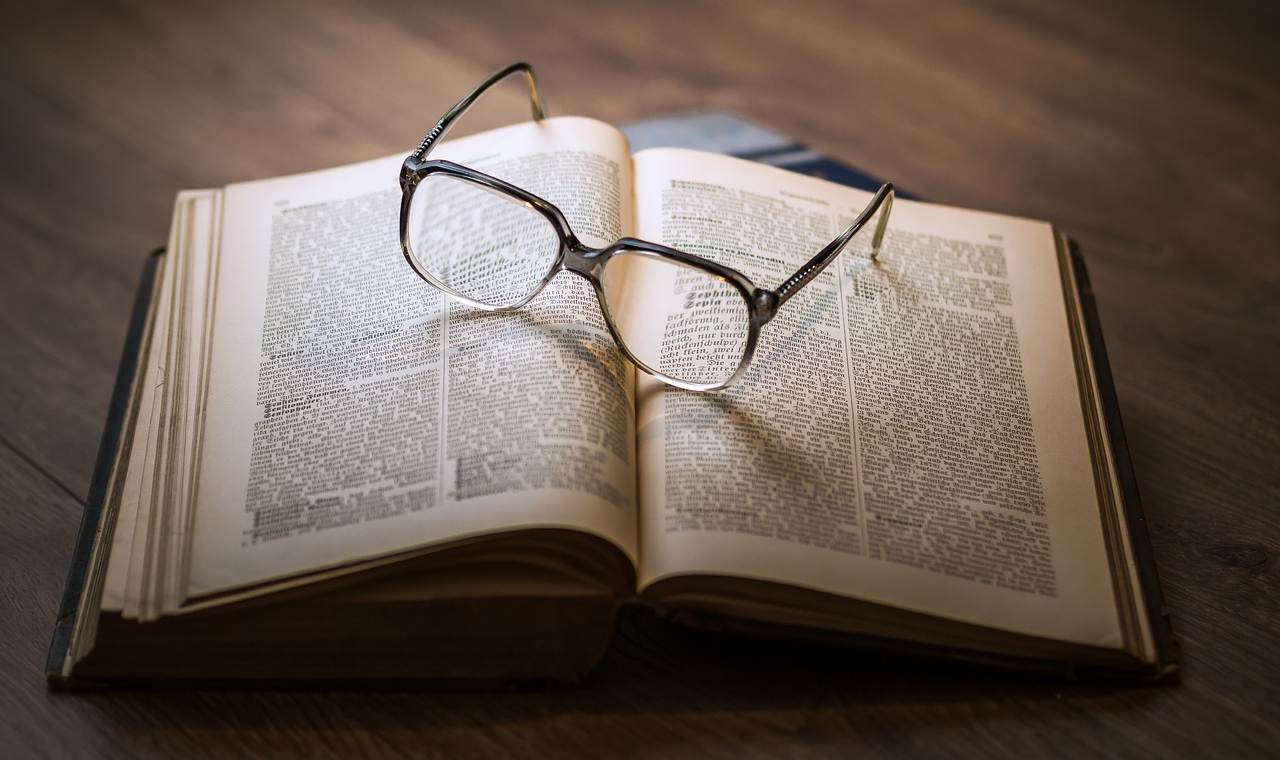
| I'm four hundred and some pages into Robert Caro's latest volume on Lyndon Johnson, and just about to fly out to California for a week. When buying the book, I grappled with the question of whether to buy it in paper or ebook. I'm not saying I made the wrong decision. But this tome isn't making the trip. I'll finish the story when I get home.
|


Who threatens our "freedom?"


One cliche, endlessly repeated, is that the military "protects our freedom." This simply is not true. The military defends our economy, and by killing people who are out to kill us, you could make a case that they defend our lives. (Admittedly, there's a bit of a chicken/egg issue there...)
But our freedoms? If we find ourselves tomorrow or next year without habeas corpus or the presumption of innocence, who will have taken it away? Al Queda? North Korea? No, they won't be over here rewriting our laws or issuing executive orders. The greatest threat to our freedom comes from ourselves. It's our own political leaders, stoking fears generated by such enemies, who can move us toward a security state. This has already been happening since 2001.
This isn't just a matter of words. By associating the military with freedom, we feed the idea that more military equals more freedom, and that the more active and well-equipped our military is, the stronger our freedoms will be. This leads to a war mentality, to a focus on enemies, and on killing them, and to a war economy, which finances political campaigns, media coverage and scientific research--in short, the military-industrial complex President Dwight Eisenhower warned of.
|


IBM: Americans "Desire Ratio" on the rise


Dataminers at IBM have been burrowing through social media postings to see how Americans are feeling. Heading into Memorial Day weekend, it's sounding like the mood is improving. References to gas prices, which have been dropping of late, register postive by a five to one ratio, compared to an even balance a year ago. IBM has a new measurement--the "Desire Index"--which reflects the ratio of positive to negative comments about shopping and Memorial Day travel. These desires have rocketed up to 6.5/1 this year, from a downbeat 1.3/1 a year ago.
Now, as those of you who read The Numerati know, I've spent time talking to people who pull sentiments out of data. (The company I looked at then, Umbria Communications, was later bought by a unit of McGraw-Hill, the company I happened to be working for at the time.) Of course it's not an exact science. The machines miss sarcasm, like "Oh yeah, I'm thrilled to be driving this Memorial Day weekend with four screaming babies and my suicidal father in law...." Nonetheless, I'm sure Twitter and blogs provide a large enough sample to power past such small misunderstandings. The IBM team no doubt gets the big trends right.
Still, wondering what sort of happy talk the computer is interpreting on gas prices, I call up Twitter and search for "gas :)"
Well, it turns out, some are pretty clear.
@damjana3
|


DART: Journalists who cover trauma


A few hours after coming home from Paris, I went to a fundraiser in New York for the DART Center, an association that helps journalists who venture into world's most dangerous places and risk their lives to tell us about them. It was in a lovely space on 62nd Street and Central Park West. The walls were covered with photographs to be sold in a silent auction, and the New Jersey band Thomas Wesley Stern was strumming beautifully.
We came away with two photos, both by Pulitzer prize winners. The first is a photo by Carol Guzy. She took it in 2000, when refugees from Kosovo were delivering a two-year-old to his family, which meant passing him through barbed wire.
|


| We also came away with a photo by Carolyn Cole (who first worked with me at The El Paso Herald-Post, in the '80s). Carolyn was covering the second Palestinian Intifada, in 2001, and managed to get into the Church of the Nativity, where a host of Palestinian fighters were surrounded by Israeli troops. The siege lasted for more than a week, and she took photos inside the church, including the one we have now. My picture, a snap shot from my phone, doesn't begin to do it justice.
|


I'm glad we got the photos. But it would also have been good to have a bunch rich people there bidding up the prices to benefit the cause. That would be my advice to DART. It was great to be among so many journalists. But we're not in the most prosperous of industries. After the bidding ended, the actor Woody Harrelson walked in. He looked around for a while, then left. Maybe next time he can come earlier with a posse of his wealthy friends.
|


Paris panel: The annotated city


| On Christmas night of 1999, the wind picked up in Paris. We were finishing dinner, and we heard things falling in the street, but didn't think much about it. The next morning, we saw that a wind storm had inflicted tremendous damage. In the Bois de Boulogne, a big park near our apartment, more than 3,000 trees were broken or felled.
|


Just a few weeks earlier, my sons and I were walking through the park
and came across one famous oak tree bearing bullet holes from World War
II. On Aug. 16, 1944, just a week before the Allied liberation of Paris,
the Gestapo marched 35 French resistance fighters into the park and murdered them on that spot. A nearby sign told the story. So on the morning of Dec.
26, we went back into the park and made our way across the chaos of
fallen trees to see if that one oak had survived. It had.
|


I'm thinking of discussing this incident at a panel I'll be moderating Monday in Paris at the New Cities Summit. I'll be speaking with Charlie Hale of Google, Jean-Louis Missika, deputy mayor of Paris (for innovation) and Alessandra Orofino, co-founder of Brazil's Meu Rio.
The theme will be "The Annotated City." The idea is that information in
cities will evolve and become personalized, perhaps coming to us through
next-generation billboards, smart phones or even Google glasses. We'll
learn more of what is relevant to us, and less of what authorities
decide we should know. In this sense, cities will follow the path of
media, in which we learn more from our friends, through messages and
updates and links, and less from the nightly news.
Why talk about the tree? Authorities, long ago judging that the tree was newsworthy, annotated it for all to see. I, for one, am glad they did. But others in the Bois in the weeks following the storm might have been interested in other, more personalized, annotations.
That area of Paris is a place of business for hundreds of prostitutes, many of them transvestites. Following the storm, they and their customers were literally barricaded from doing business. So many of the prostitutes made their way to the properous suburb of St. Cloud, just across the river from the Bois. This caused quite a hubbub in the town. Nonetheless, it would have been highly useful to them to be able to leave virtual messages in the park, some sort of annotation, letting their customers know where to find them.
As new cities develop, each of us will be getting the streams of information that are relevant to us. We'll have fewer shared experiences. After all, if your friends are steering you through Google glasses to the boat rentals in the Bois (below), you might walk right past that oak without seeing it. Of course, if you're interested in history, maybe your friends will direct you straight to that tree. I would.
|


Sensors on our food--and our diets


I bought this orange pepper last week at a grocery story called Corrado's, down the road in Clifton, NJ. It cost 99-cents/pound, a bargain for colored peppers. But you can see from the dimples at the top that this pepper was in that bargain bin for a reason. It was getting a little old.
Corrado's is full of bargain shoppers. If I had traveled two miles in the other direction, to Whole Foods in Montclair, I could have bought a spryer version of this pepper for perhaps four times as much. But I prefer to dig through the produce at Corrado's and unearth (relatively) youthful specimens in bargain bins. I'm able to do this, I think, because the grocers have only a vague idea of the freshness of the produce. If a batch has been around for a certain number of days, mark it down. This is a rule, or heuristic. But science is busy replacing those vague rules with specific instructions, ones based on observations. That is, data.
Scientists at MIT have now developed sensors to detect the step-by-step process of ripening and rotting in fruit and vegetables. These sensors detect and measure tiny traces of ethylene, a gas that promotes ripening. In time, these sensors should be cheap, and it will be possible for grocers to place them on crates of produce. Then they will be able to calculate exactly how much to charge for an orange bell pepper that will be dimpling (like mine) within, say, 14 hours. (Of course, the calculation is extraordinarily complex, because it has to balance the potential of enticing non-pepper buyers vs the revenue lost when shoppers already planning to buy full-priced peppers opt for cheap rotting ones instead. Data analysts, as I outlined in The Numerati, are busy grappling with such issues.)
Once we have affordable sensors to detect a fruit's exact stage or ripeness, consumers will be using them, too. In time, we'll be able to monitor each piece of produce in our refrigerators. Food columnists and diet book authors will be telling us at exactly what point to eat shittake mushrooms or Belgian endives. Some of us will demand this data from supermarkets. And then, no doubt, some will attempt to correlate the ripeness of the food we eat with our health, and with the risk of dread diseases. Next thing you know, dinner guests will be alerting hosts that they don't eat this or that vegetable past a certain freshness threshhold.
Here's the worst part. What if it turns out that certain foods are much better for us before they actually taste good? Will those of us who eat ripe pears and tomatoes be viewed as decadent? Perhaps. I know this is heresy in the age of Big Data, but there's such a thing as knowing too much....Meantime, I have a certain pepper to eat right away.
|


Thinking in a foreign language


A study in Wired makes the case that thinking in a foreign language makes for more rational decisions. The idea is that people have to slow down to express their thoughts in a second (or third etc.) language, and that this pause might lead to more sensible decisions about which medicine to give your kid or how to invest your 401K.
As someone who has spent many years speaking a second and third language, my response is: hmmm (which, by the way, translates seamlessly into Spanish and French.) The problem with a non-native language is that you lack the ability to express nuance. Let's say you taste a soup. It's slightly sweet, but whoever cooked it went a little wild with the cumin, leaving it with a taste that recalls the leather tassels that held your ancient baseball mitt together. You could say that in your native language, assuming that protocol didn't interfere. But in a second language, you're more likely to reduce it to the basics.
Here are some choices:
Sophisticated: Tasty, but perhaps a bit too much cumin.
Simpler: Good, but a little strange.
Basic: Good.
So does thinking in a foreign language remove nuance from the equation? Probably not. Even though the speaking is often more primitive, the thinking is not. In fact, the person with rudimentary language skills has to work hard to reduce complex thoughts into a few words that communicate the essence of it. This involves a search for meaning, a task that native speakers can bypass. It's a bit like taking a complex discussion and trying to boil it down into a tweet. Perhaps this editing process can lead to better and more nuanced decisions--even if the words aren't on hand to express them.
|


Kahneman, Foer, Memory and Time


I was under immense pressure. Maybe a hundred of us were lined up around a spiral staircase at the Rubin Museum
playing a game of Whisper Down the Lane. At the bottom of the staircase
was Daniel Kahneman, Nobel Prize-winning psychologist and author of Thinking, Fast and Slow. He was sending a message, through us, to the Joshua Foer, author of Moonwalking with Einstein.
(I swear, my next book is going to have a title like that...) The
success of this transmission, the so-called Karma Chain, hinged on each
of us. It was no stronger than the weakest link. That was what concerned
me.
I was standing next to a young woman who was not born in this country.
As I peered down and saw the message climbing the 108 steps toward us,
one person whispering to the next, I overheard her talking to her
friend. Her English was... labored. The moment finally came. I bent
down. She whispered to me. But instead of concentrating exclusively on
the sounds coming out of her mouth, I was thinking: Each word that I
don't catch is gone forever, because I won't be able to ask her to
repeat it! The noise, as I played it back, was something like "sing." I
collected myself, and captured the last few words. But when it came to
the next step, transmitting this information to my wife, I realized that
I'd blown it. Fully half of the sentence that Kahneman had uttered, at
least the twisted version that had made its way up to me, was gone.
I had to make something up. So I fashioned a small phrase around "sing,"
and the result was something about "you sing the memory of my meaning,"
or some such. That ridiculous sentence made it, more or less intact, all
the way to Foer. And when he got on stage with Kahneman, to talk about Time and Memory,
he delivered it. Everyone laughed. The key word in the original sentence was "think," which I had changed to "sing." I felt the perverse thrill of a
graffiti artist: That sentence is mine! I had unwittingly, or perhaps
wittlessly, sabataged the communal effort.
Following this debacle, the two men, one an elderly psychologist, the other a young memory
champion, discussed what happens to our memories over time. For me, the section on memory was the most interesting part of Kahneman's book, how we interpret and
experience our lives, and even curate them, as a function of our
memories. He discussed two different types: the experiencing memory
and the historical one. The first is what is happening to you today. The
second is what you choose to file away from today, if anything, for
future reference, and how you classify it. One is how you experience your life, the other is how you
remember it.
|

|

The experience memory (Nantucket)
Kahneman contrasted two types of vacations. The experience
vacation is a week or two at the beach. Every day is more or less the
same, and the same as it was last year and the year before that. It's
pleasant. It appeals to the senses and settles, in the best of cases,
into easy routines. Sure, children and grandchildren file through, as do
storms, sun burns, jellyfish stings, hangovers. But for the most part,
these vacations are for experiencing, not remembering.
The second
kind is the archetypal eight-day trip to Paris, Rome, London and
Madrid. This is the memory vacation. Much of it might be spent in lines,
listening to fellow foreigners gripe about the $14 coke on the Champs
Elysees or the taxi driver who "pretended" not to understand English.
But these trips are projects for the historical memories. People
dutifully take photos, read guidebooks, and walk through the Prado or
the Vatican Museum until their lower backs feel wobbly. At the end, they have to
make an editing decision: What to remember? Some put
together memories like scrapbooks: Our Wonderful Time in Europe. They
remember great meals, wonderful art, beautiful vistas, and they use them to
feel good about their lives--and justify them to others. It is the
historical lives that people generally include in their year-end group letters.
This
isn't necessarily a bad thing. The memories we choose to keep and
curate represent important furnishing for our minds. Decades ago, I
climbed to the peak overlooking Macchu Picchu with a friend. I'm sure I
wasn't enjoying it the entire time. Knowing us, we were probably arguing
about politics or baseball, or maybe how much money we'd spent the
previous night at dinner. But my memory of that day, no matter how
inaccurate or idealized, remains precious to me.
Still, Kahneman,
with the wisdom of his years and experience, urged us not to minimize
the value of the experience memory. He stressed focusing on the simple
pleasures, and spending less time and effort today trying to create valuable
memories for tomorrow. In a sense, he was preaching to the home
crowd, since the Rubin Museum, with its focus on Himalayan cultures, is
big on living in the Now. But it was interesting to contrast his point
of view with the much younger Foer, who seemed intent on building,
tagging and archiving memories, and struggled to appreciate
the value of the days, no matter how pleasant, that slip into oblivion.
|


Ozzie Guillen, Bob Dylan and Castro


As you've probably read, Miami Marlins manager Ozzie Guillen is in trouble for telling a Time magazine reporter that he "loves" Fidel Castro. It's not an uncommon opinion, especially in Guillen's Venezuela, where some appreciate Castro for his politics, and far more for thumbing his nose at the Americans for so many decades. Here's Guillen's quote:
"I love Fidel Castro. I respect Fidel Castro, you know why? A lot of people have wanted to
kill Fidel Castro for the last 60 years, but that motherf****r is still
here."
That reminded me of a song Bob Dylan sang 50 years ago, Motorpsycho Nightmare, with a very similar line:
"I had to say something
To strike him very weird,
So I yelled out,
"I like Fidel Castro and his beard."
Rita looked offended
But she got out of the way,
As he came charging down the stairs
Sayin', "What's that I heard you say?"
I said, "I like Fidel Castro,
I think you heard me right,"
And ducked as he swung
At me with all his might.
If Dylan, like Guillen, ran his business in Miami's Little Havana, he too would have been under loads of pressure to apologize. But something tells me he would have laughed it off.
|


Don't let your kids in the car


danah boyd writes about social media and the culture of fear. One of the distinctions she draws is between our assessment and our perception of risk. Say a sinuous shadow crosses your vision gives you a start. As our ancestors learned (the hard way), It could be a tiger's tail. Then you might assess the situation: First, Tigers are rare in Newark's Liberty Airport. Then you look to the source and see a baby in front of the window playing with a stuffed monkey. You relax.
But the television in the departure lounge keeps playing a story about a Pakistani militant linked to the 2008 Mumbai bombing. He's apparently still in business. You've just been through a security operation that reinforces the perception that terrorist threats are everywhere. But what's your assessment of the risk?
Boyd writes:
...[P]arents regularly come up to me and ask what's the #1 thing that they
should do to keep their kids safe. They really want to hear something
like "don't let them on Facebook" or "don't give them a cell phone." Their idea of what they should fear is all about new technology. No one
is prepared for my response: "Don't let them get into a car with you."
Invariably, they twist their faces in confusion as I explain that
statistically, children are more at-risk in a car than in any other
setting they encounter, regardless of who's driving. To a parent, the
car "feels" safe because they feel as though they're in control. They
feel as though they understand the care. Things like the internet do
not feel safe because they feel out of control and that they don't know
how these newfangled things operate.
Feel is the operative word here;
it's all about perception. Fear is not predicated on risk assessment, but the perception of risk. We fear the things – and people -- that we do not understand
far more than the things we do, even if the latter are much more
risky. For this reason, it's not surprising that people fear
technology. Its newness is confusing and no one's quite certain what to
do with the promises it offers. Furthermore, technology allows us to
see people who are different than us, the very people we are likely to
fear. We fear the unknown. And technology is both an unknown itself
and a vehicle to connecting us to greater unknowns.
|


|

|


|
 |


The endgame: Will tying Walker to criminal investigation be enough to beat him?:

follow me on twitter


Kirkus - Kirkus Reviews

Andrew Dunn - Bloomberg News

Culture Mob - Dan Sampson

Shelfari (Amazon) - Tom Nissley

read more reviews


"Corporations are People": an op-ed
- August 16, 2011

Wall Street Journal excerpt: Final Jeopardy
- February 4, 2011

Why IBM's Watson is Smarter than Google
- January 9, 2011

Rethinking books
- October 3, 2010

The coming privacy boom
- August 17, 2010

The appeal of virtual
- May 18, 2010

My next book: IBM's Jeopardy mission
- March 22, 2010

BusinessWeek's strategy
- November 12, 2009

BusinessWeek cannot afford to stay within McGraw-Hill
- August 6, 2009

How to remake BusinessWeek?
- July 16, 2009

Fiction: The Andean Correspondent
- May 30, 2009

It's OK not to read the book...
- January 8, 2009


|